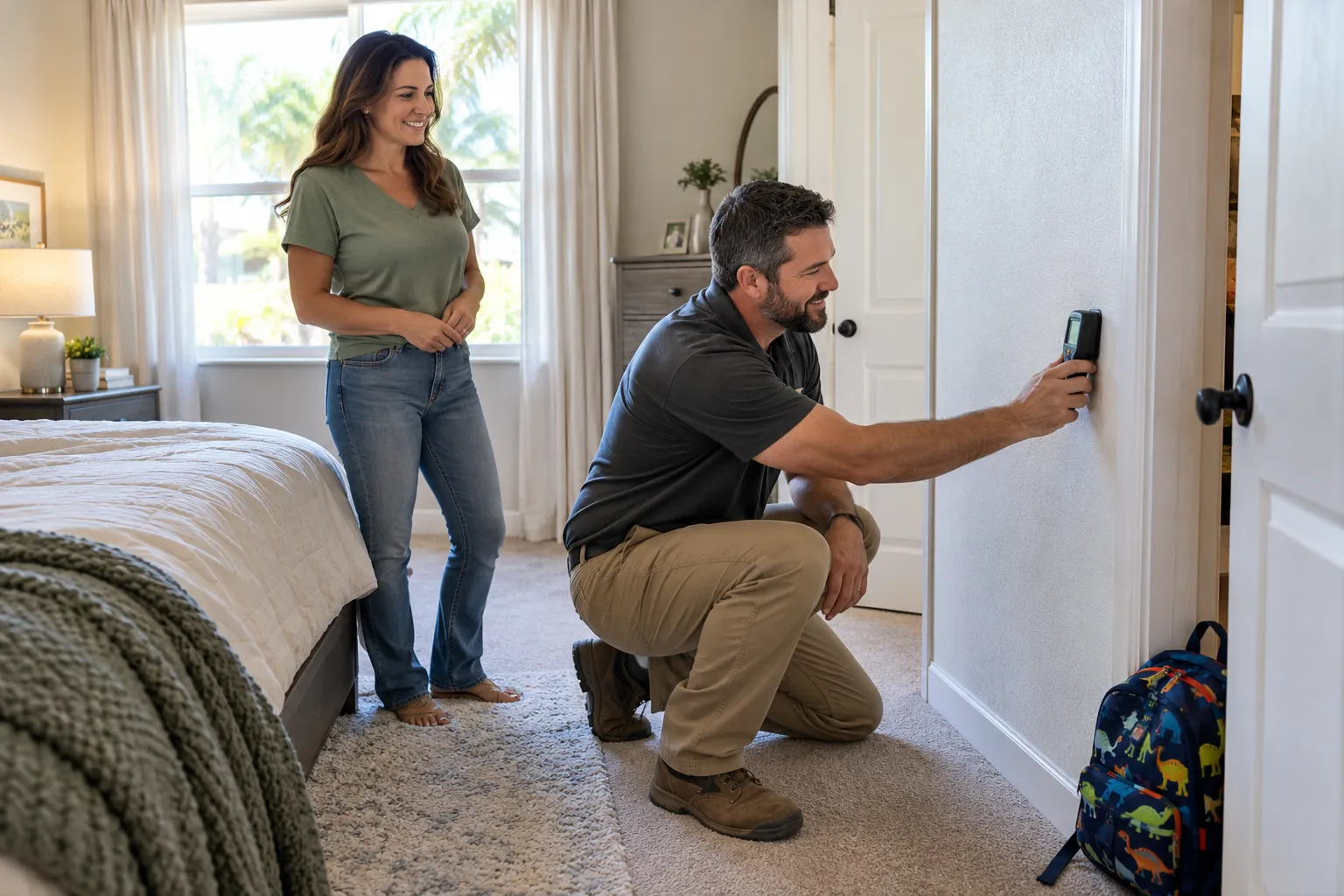
Mold inspection and testing helps you answer three questions: is there mold, where is it and how much is there? An inspection is a visual check of the home, often with moisture meters and thermal cameras to find damp spots behind walls and under floors. Testing adds air or surface samples that are sent to a lab for analysis.
Categoryland Mold Help is a referral service. When you call, we connect you with an independent local mold inspection provider in the Orlando area. The provider walks through your home, looks for moisture and growth, takes samples if they're useful and explains the results in plain language. An inspection can be helpful before buying a home, after a leak, when you notice a musty smell or after remediation to check the work. Ask for a written estimate and a written report.
Think You Have Mold? Start Here
A musty smell, new stains or a past leak are all good reasons to have your home checked. You don't need to see mold to have a mold problem. Growth often starts behind drywall, under carpet, inside cabinets or in the attic, well out of sight.
Before the inspection, don't clean or paint over suspicious spots. Leave the area as it is so the inspector can see what's there. If you've had a recent leak, note when and where it happened.
If anyone at home has health concerns, talk to a doctor. An inspection tells you about your home, not about your health.
When an Inspection Makes Sense
An inspection is useful in many situations, including:
- You smell mold but can't see it. A musty odor often means hidden growth.
- You've had a leak or flood. Water that wasn't fully dried can lead to growth inside walls.
- You're buying or selling a home. An inspection can answer questions before closing.
- Mold keeps coming back. Recurring spots usually mean a moisture source hasn't been found.
- Remediation just finished. A follow-up check can confirm the work area is clean and dry.
What Happens During a Mold Inspection
Most inspections follow a similar path.
Interview and Walkthrough
The inspector asks about past leaks, smells and problem areas. Then they walk through the home, including the basement, crawl space, attic and rooms you're concerned about.
Moisture Readings
Moisture meters measure how wet drywall, wood and flooring are. Damp readings point to places where mold may grow, even if nothing is visible yet.
Thermal Imaging
Thermal cameras show temperature differences across walls and ceilings. Cool spots can mean hidden moisture. The camera doesn't see mold itself, but it helps the inspector decide where to look closer.
Visual Checks in Hidden Spaces
The inspector may look under sinks, behind access panels and inside HVAC components. In some cases, they may suggest a small inspection hole to check inside a wall.
Types of Mold Testing
Testing isn't always needed. When it is, providers usually use one or more of these methods.
Air Sampling
A pump draws air through a collection device for a set time. Samples are taken in the problem area and outdoors for comparison. The lab reports the types and amounts of spores in each sample.
Surface Sampling
A swab or tape lift collects material from a visible spot. The lab identifies what type of growth is present.
Bulk Sampling
A small piece of material, like drywall or carpet, is removed and sent to the lab. This is less common but can help in some situations.
Lab results usually come back within a few business days. Ask the provider how long their lab takes.
Understanding Your Results
A lab report can be hard to read on your own. The provider should explain it in plain language, including:
- How indoor spore levels compare with the outdoor sample
- Which types of mold were found, and where
- Where the moisture is coming from
- Whether remediation is recommended, and for which areas
Keep in mind that some mold spores are present in nearly every home. Testing is about finding unusual levels or active growth, not reaching zero.
Inspection and Remediation: Separate or Together?
Some homeowners prefer to use one company to inspect and a different company to remediate. This can give you an independent opinion. Some states have rules about whether the same company can both test and remediate the same job. Ask the provider what applies in Florida.
How to Prepare for Your Inspection
A little preparation helps the inspector work faster and get a clearer picture of your home:
- Make sure the inspector can reach the attic hatch, crawl space entry, water heater and HVAC unit.
- Move stored boxes away from basement walls if you can do it without disturbing visible growth.
- Write down any past leaks, floods or repairs, with rough dates.
- Note the rooms where the smell is strongest and the times it seems worse.
- Keep windows closed for several hours before air sampling, unless the provider says otherwise.
- Avoid running air purifiers or cleaning heavily the day before testing.
If you rent your home, let your landlord know about the visit. If you're buying, check with your agent about access and timing. Ask the provider whether they want anyone present during the inspection, and how long they expect to be on site.
Questions to Ask the Provider
The providers in our network are independent businesses. Before you book, ask:
- Are you licensed or certified for mold assessment in Florida, if required?
- Will you use moisture meters and thermal imaging?
- Do you recommend testing for my situation, and why?
- Which lab do you use, and how long do results take?
- Will I get a written report?
- Can I get a written estimate before you start?
You're never obligated to hire the first provider you speak with.
Have a musty smell or a past leak? Call to check provider availability near you.
What's Included
Visual Inspection
The provider checks living spaces, basements, attics and crawl spaces for growth and water damage.
Moisture and Thermal Checks
Moisture meters and thermal cameras help find damp spots hidden behind walls and floors.
Air and Surface Sampling
Samples are collected where useful and sent to a lab for analysis.
Written Report
You get a clear summary of what was found, where and what the provider recommends next.
What Do Mold Inspection and Testing Cost?
Pricing depends on the size of your home, how many samples are taken and how hard areas are to reach. These are typical U.S. ranges that vary by job, so ask for a written quote.
| Item | Typical range | Notes |
|---|---|---|
| Visual mold inspection | $200 – $600 | Smaller homes or one problem area |
| Inspection with testing | $300 – $1,000 | Includes a few lab samples |
| Large home inspection | $700 – $1,500+ | Many rooms, attic and crawl space |
| Air sample, per sample | $75 – $200 | An outdoor sample is often added |
| Surface or tape sample | $50 – $150 | Per sample, lab fees included |
| Post-remediation clearance test | $200 – $600 | Checks the work area after cleanup |
How It Works
1. Call Categoryland Mold Help
Tell us what you've noticed and your location. We connect you with a local provider.
2. Walkthrough
The provider inspects your home and checks for moisture with meters and thermal imaging.
3. Sampling if Needed
Air or surface samples are taken where useful and sent to a lab.
4. Results and Next Steps
The provider explains the report and what, if anything, needs to happen next.
Why Call Categoryland Mold Help
Quicker Answers
One call connects you with a local inspector, so you can find out what's behind the smell sooner.
Proper Tools
Providers use moisture meters, thermal cameras and lab testing, not guesswork.
Clear Reports
Ask for a written report that explains results in plain language.
No Obligation
Ask questions, get a written estimate and decide what's right for your home.